KUANGTU HANDBAGS editorial team
At a glance
Hermès began as a Paris harness workshop in 1837. Its bag history includes the adoption of a zip system in 1922, a 1930s design later named Kelly, and the Birkin in 1984. Those dates explain the house’s development; choosing a bag still requires a separate look at its opening, carrying arrangement and verified dimensions.
From a harness workshop to travel accessories
Hermès traces its beginnings to Thierry Hermès’s 1837 workshop on rue Basse-du-Rempart in Paris. In 1880, Charles-Émile Hermès moved the business to 24 Faubourg Saint-Honoré, where the store supplied made-to-measure harnesses and saddles.
This equestrian background helps explain the prominence of straps and fastening details in the house’s story. It does not establish how a present-day supplier item was made, where it was produced or whether its materials match an official Hermès specification.
Sources: Hermès — Six generations of artisans
1922: adopting a zip, not inventing it
The official history describes Émile Hermès seeing an American “close-all” system on a military vehicle hood in Canada. In 1922 he obtained exclusive rights to the system, which was subsequently used on many of the house’s bags.
That account is about adopting a fastening technology. It is not a claim that Hermès invented the zipper, and the passage does not supply a launch date for every zipped bag. A Bolide-named supplier listing therefore needs its own identification and measurements.
Sources: Hermès — Six generations of artisans
Kelly and Birkin: two different historical moments
According to Hermès, Robert Dumas created the bag now known as Kelly in the 1930s. Photographs of Grace Kelly carrying it in 1956 helped popularise the design, and the house subsequently named it after her. The naming story should not be mistaken for a 1956 design debut.
The same history dates the Birkin to 1984, following Jean-Louis Dumas’s meeting with Jane Birkin on a Paris-to-London flight. These are distinct origin stories, not size codes or evidence of the age of a particular bag offered today.
Sources: Hermès — Six generations of artisans
Compare how you reach the contents
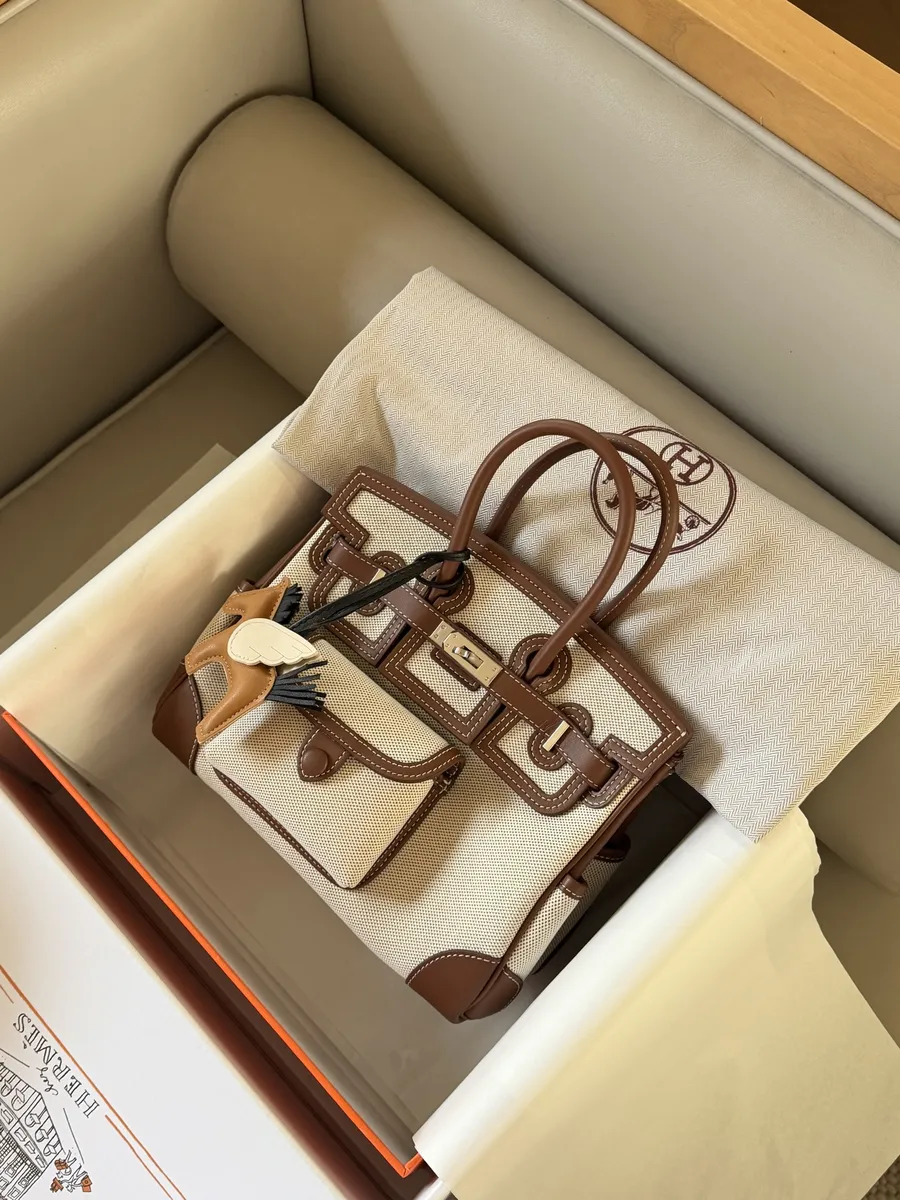
KU-A6AE664A is a Bolide-named catalogue reference photographed with a rounded body, a zip following the top curve and two handles. KU-6BA35342 is a Birkin-named canvas reference photographed with twin handles, a flap and front straps. The useful visual comparison is the route into the bag: a curved zipped opening versus a flap-and-strap arrangement.
If you often retrieve a phone while standing, ask for a short opening demonstration with the fastenings fully secured first. For either shape, check the clear opening width and how the handles sit during access. A posed photograph with a bag open cannot establish how convenient it is when closed.
Use the catalogue measurements without filling the gaps
The Bolide-named record lists Large — 26 × 19 and Small — 18 × 14, with no unit. The canvas Birkin-named record lists 25 × 20 cm. Neither provides a complete labelled set of width, height and depth. They cannot support a reliable capacity comparison or an exact official size assignment.
KUANGTU records Genuine leather as a store-provided description for the first item and Canvas as supplier-described for the second. Their brand identities remain unverified. Choose the photograph and SKU you mean, then request the missing dimensions, closure details and included accessories; scarves, charms and packaging in an image do not establish the quoted contents.
Catalogue references to compare
These photographs and records are separate from the official brand sources. Supplier-listed specifications do not authenticate an item or confirm an exact match to a retail model.
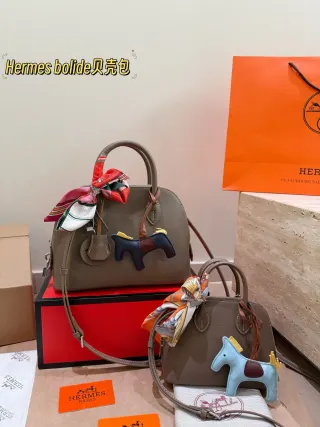 Hermès Bolide Crossbody Bag in LeatherSKU KU-A6AE664A · Supplier-listed: Large — 26 × 19 (unit not listed) / Small — 18 × 14 (unit not listed)Brand identity not independently authenticatedView photographs & item details →
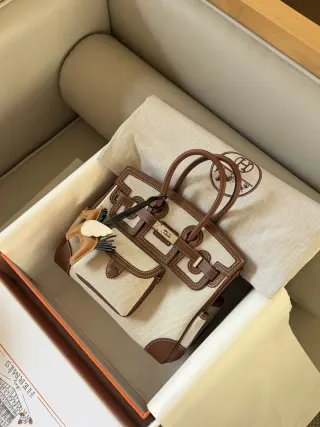 Hermès Birkin Canvas Handbag — 25 × 20 cmSKU KU-6BA35342 · Supplier-listed: 25 × 20 cmBrand identity not independently authenticatedView photographs & item details →
Questions & answers
When did Hermès begin?
The house’s official history dates Thierry Hermès’s Paris harness workshop to 1837.
Was the Kelly first designed in 1956?
No. Hermès places Robert Dumas’s design in the 1930s; 1956 relates to the famous Grace Kelly photographs and subsequent naming story.
Did Hermès invent the zipper?
The cited account describes Émile Hermès obtaining rights to a zip system in 1922. It does not say he invented it.
Can I compare the two catalogue bags by their listed numbers?
Only cautiously: the Bolide-named dimensions lack units, and both records lack labelled three-axis measurements. Request the missing information before comparing fit.
Continue exploring
- Hermès Kelly 25 vs 28 vs 32: size and construction
- How to Measure a Handbag for Wholesale Orders
- Browse Hermès-named catalogue references
Prepare a wholesale enquiry
Use the catalogue SKU, selected option and quantity in your brief, then add your delivery country and the details you need confirmed. Wholesale orders start from 5 pieces; the permitted mix, samples and shipping are confirmed in the quote.
Wholesale ordering: minimum quantity, samples and quote stepsSources & scope
The official historical narrative was read on 26 September 2026. It is used for dates and attribution, not to authenticate catalogue items. Both existing supplier photographs were inspected; missing units, axes and accessories remain unconfirmed.
- Hermès — Six generations of artisans · Accessed