KUANGTU HANDBAGS editorial team
At a glance
Burberry Check is a repeating pattern; the Equestrian Knight Design is a separate emblem with its own history. Burberry dates the Check's raincoat-lining use to the 1920s and the Knight design to around 1901. For a bag, distinguish an all-over patterned body from a plain exterior with an emblem or a check lining. Those placements change the visual effect without establishing the material or the bag's origin.
How a lining became an accessory design
Burberry's corporate history says the Check first lined its raincoats in the 1920s. It gives a more specific accessory milestone in 1967: a buyer at the Paris store used a coat's check lining to wrap luggage and make an umbrella cover for a presentation. The story explains the movement from a partly hidden lining to a visible surface.
The same source dates the check cashmere scarf to the 1970s and describes later variations of the pattern. That sequence matters when reading product names: a check reference can describe the body, trim or lining, and a familiar pattern need not appear in the same colour or orientation in every design.
Sources: Burberry Group — The Burberry Check
The Knight is a symbol, not another check name
The official Equestrian Knight history places its origin in a public design competition circa 1901. Burberry explains the knight as honour, the shield as protection and the lance as reform. The banner bears Prorsum, translated from Latin as Forward. These are the brand's interpretations of its emblem, separate from the history of the Check.
Burberry also records an iteration of the Knight inside an oak-leaf crest. When looking at a crest-named bag, identify what is actually visible: a central motif, a repeating pattern or both. The presence of any such motif is not enough to establish the age, manufacturer or authenticity of a supplier-listed bag.
All-over check and a quieter exterior make different choices
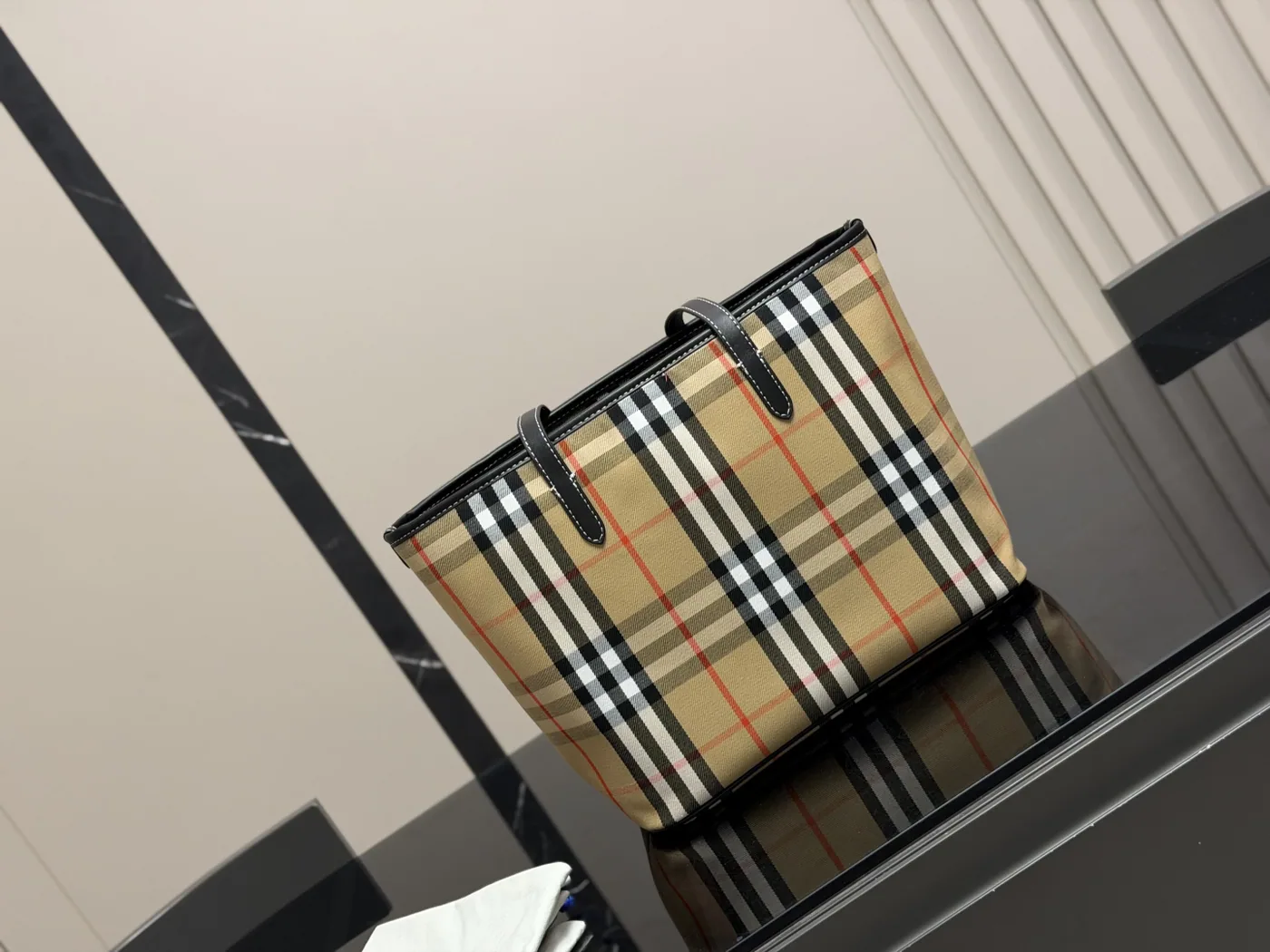
The beige check tote linked below shows the pattern across its main exterior, framed by dark handles and edging. Its supplier record lists 29 × 25 cm. The black crest-named tote has a plainer outer body; its catalogue gallery shows check inside and an internal zipped pocket. That record lists 35 × 30 cm. These are two supplier references, not an official Burberry size comparison.
If you want the pattern to be visible while carrying the bag, inspect the body and sides in the photographs. If you prefer it as an interior detail, look at an open-bag view rather than the front alone. An internal zipped pocket also should not be mistaken for a zip that closes the whole tote.
A check pattern does not identify the fabric
Both linked tote records describe canvas, but neither description is a full fibre-composition report. Burberry's history of a cashmere scarf does not make a check handbag cashmere; the rainwear story does not make every patterned bag waterproof. Pattern, substrate, coating and trim are separate pieces of information.
Ask for the body composition, any surface coating, the lining and the handle material in writing. For a working tote, also ask for the usable opening, base depth and handle drop. Those missing measurements affect a laptop or shoulder-carry decision more directly than the design name does.
Choose the placement before choosing the colour
Compare one all-over patterned tote with one plain-exterior reference, using similar front, side and open-top photographs. Then decide how much pattern you want to see, which closure you need and whether the handles clear your usual clothing. This keeps a visual preference connected to a practical use.
The catalogue records below retain their own specifications and identity notices. Use the SKU and requested size in an enquiry so that a response addresses the exact reference. The official heritage pages provide design context; they do not establish that either catalogue item is an authorised Burberry product.
Catalogue references to compare
These photographs and records are separate from the official brand sources. Supplier-listed specifications do not authenticate an item or confirm an exact match to a retail model.
 Burberry Check Shopping Tote — BeigeSKU KU-5C100656 · Supplier-listed: width 29 cm × height 25 cmBrand identity not independently authenticatedView photographs & item details →
 Burberry Crest Shopping Tote — BlackSKU KU-77304A54 · Supplier-listed: width 35 cm × height 30 cmBrand identity not independently authenticatedView photographs & item details →
Questions & answers
Are Burberry Check and the Equestrian Knight the same design?
No. The Check is a repeating pattern; the Equestrian Knight is a distinct emblem. Either may appear in different positions on a product.
When did Burberry start using the Check?
Burberry says it first lined its raincoats in the 1920s and identifies 1967 as the accessory-story milestone described here.
What does Prorsum mean?
Burberry translates the Latin word on the Knight's banner as Forward. This is part of the emblem's history, not a specification for a particular bag.
Is every check bag canvas or waterproof?
No material or water-resistance claim follows from the pattern alone. Read the exact item's body, lining, trim and coating information.
Continue exploring
- Tote Bag Buying Guide: Size, Handles & Compartments
- How to Measure a Handbag for Wholesale Orders
- Burberry-named totes and other catalogue shapes
Prepare a wholesale enquiry
Use the catalogue SKU, selected option and quantity in your brief, then add your delivery country and the details you need confirmed. Wholesale orders start from 5 pieces; the permitted mix, samples and shipping are confirmed in the quote.
Wholesale ordering: minimum quantity, samples and quote stepsSources & scope
Evergreen design history drawn from Burberry Group pages read on 23 September 2026. Circa 1901 and the 1920s remain approximate as stated by the sources. Linked supplier catalogue records are not authenticated by those histories; no Burberry affiliation is implied.
- Burberry Group — The Burberry Check · Accessed
- Burberry Group — The Equestrian Knight Design · Accessed