KUANGTU HANDBAGS editorial team
At a glance
Fendi was founded in Rome in 1925 by Adele and Edoardo Fendi. LVMH identifies two later handbag milestones by Silvia Venturini Fendi: the Baguette in 1997 and the Peekaboo in 2008. These names describe distinct design families. When comparing supplier references, look beyond the name to the body's proportions, opening and handle arrangement, then confirm the exact size and material.
Begin with the house, then the handbag milestones
LVMH's Fendi profile dates the house's foundation to Rome in 1925. It describes the first handbag shop and fur workshop as opening soon afterwards, while its photograph caption dates the first boutique to 1926. The founding year and the date attached to that shop image should not be treated as interchangeable.
The profile records the five Fendi sisters' collaboration with Karl Lagerfeld beginning in 1965. For handbags, its Icons section explicitly names Silvia Venturini Fendi's Baguette in 1997 and Peekaboo in 2008. Neither milestone makes a current supplier listing a newly released model.
Sources: LVMH — Fendi history and Icons: Baguette and Peekaboo
Use the two names to ask different shape questions
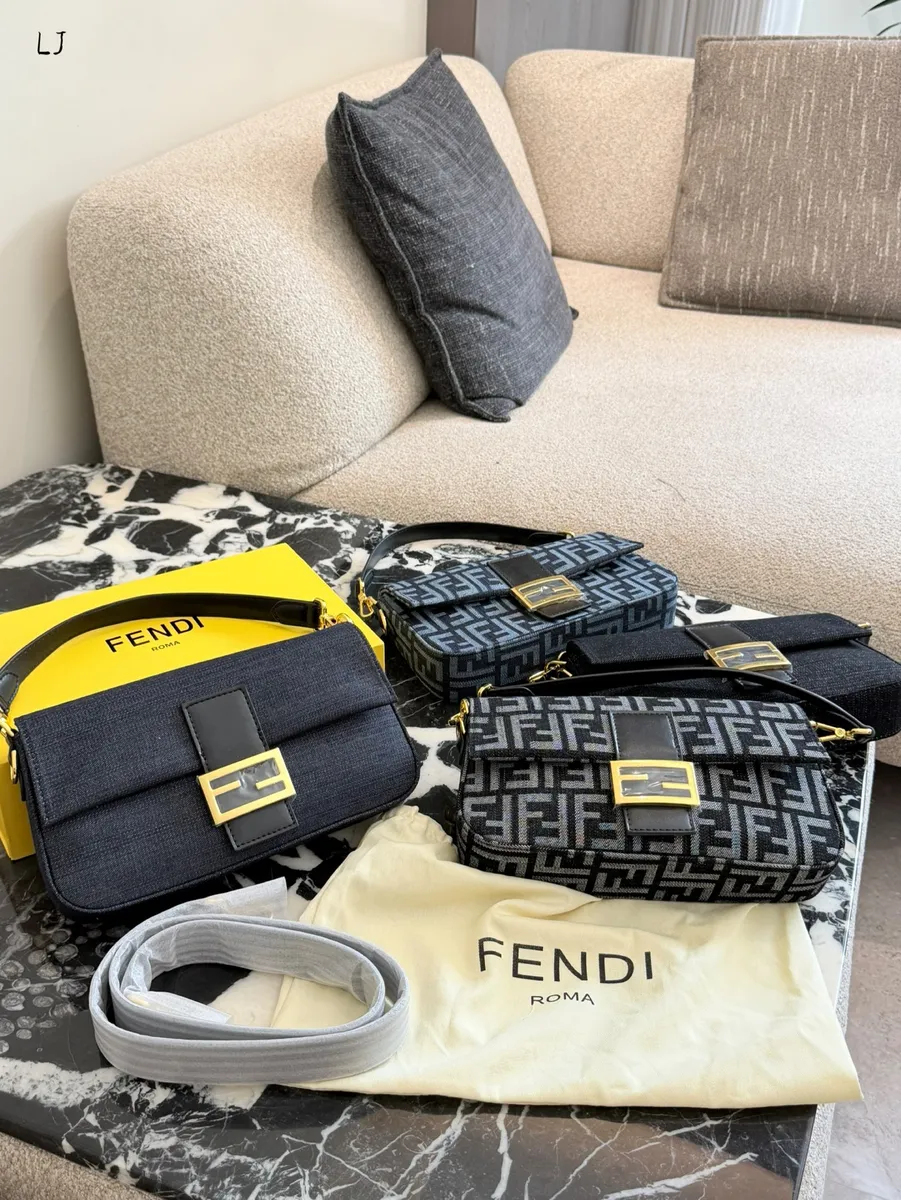
The Baguette-named catalogue reference KU-AD14CE60 shows a low, horizontal flap body with a short strap and a rectangular metal front detail. The Peekaboo-named KU-D66D94A9 photograph shows taller, upright top-handle references, with a separate wider strap also displayed. These are observations of supplier photographs, not proof of official construction.
For the horizontal reference, ask about the opening under the flap and the available shoulder clearance. For the upright reference, ask about base depth, handle drop and whether the displayed long strap is included. A photograph of a closed bag does not reveal internal partitions or how its fastening works.
Do not compare two size labels as if they were volumes
KU-AD14CE60 is recorded at 28 × 16 cm, with depth absent. KU-D66D94A9 has a single 30 cm size label, without a complete set of measurements. There is not enough information to conclude which holds more, even though 30 is the larger number.
Compare width, height and depth measured in the same way, then check the clear opening separately. A rigid glasses case needs room to pass through the opening as well as room inside. If you are choosing between official Baguette Mini and Medium models, use the dedicated size guide below rather than extending these supplier labels into official specifications.
Separate a repeating pattern from material evidence
The Baguette-named reference is described as canvas by its supplier. The Peekaboo-named reference has a store-provided genuine-leather field. Neither a repeated letter pattern nor a smooth-looking photograph establishes the exact fibre, coating, leather type or lining of the offered item.
Request separate descriptions for the body, trim and lining when material affects the choice. Ask for an interior photograph if pockets or dividers matter. The LVMH history supplies chronology; it does not certify the material or construction of either linked catalogue SKU.
Make the shortlist specific enough for an enquiry
Choose the preferred outline first: a compact horizontal flap reference or a more upright handled reference. Then attach the SKU and selected colour photograph, and ask for the missing measurements and included straps. This avoids an enquiry that says only Baguette or Peekaboo and leaves several versions unresolved.
KUANGTU's linked records preserve their unverified brand identity notices. Use the historical names to navigate the catalogue, while treating fit, fastening and material as separate questions that need evidence for the actual item. No official source or branded packaging photograph authenticates a supplier listing by association.
Catalogue references to compare
These photographs and records are separate from the official brand sources. Supplier-listed specifications do not authenticate an item or confirm an exact match to a retail model.
 Fendi Baguette Monogram Canvas Shoulder Bag — 28 × 16 cmSKU KU-AD14CE60 · Supplier-listed: 28 × 16 cmBrand identity not independently authenticatedView photographs & item details →
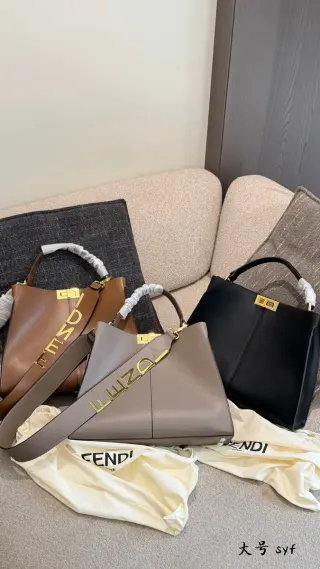 Fendi Peekaboo Tote Bag in Leather — 30 cmSKU KU-D66D94A9 · Supplier-listed: 30 cmBrand identity not independently authenticatedView photographs & item details →
Questions & answers
Was Fendi founded in 1925 or 1926?
LVMH gives 1925 as the founding year in Rome and dates its first-boutique photograph to 1926. They refer to different milestones in the source.
When did the Baguette and Peekaboo appear?
LVMH's Icons section dates the Baguette to 1997 and the Peekaboo to 2008, both created by Silvia Venturini Fendi.
Is the 30 cm reference necessarily larger inside than the 28 × 16 cm one?
No. One has a single size label and the other lacks depth. Complete exterior measurements, opening clearance and interior layout are needed.
Does the Fendi history verify the linked bags?
No. It supports the historical account only. The linked supplier records retain unverified identity and their separate material descriptions.
Continue exploring
- Fendi Baguette Mini vs Medium: proportions and carrying
- Tote Bag Buying Guide: Size, Handles & Compartments
- Fendi-named catalogue references
Prepare a wholesale enquiry
Use the catalogue SKU, selected option and quantity in your brief, then add your delivery country and the details you need confirmed. Wholesale orders start from 5 pieces; the permitted mix, samples and shipping are confirmed in the quote.
Wholesale ordering: minimum quantity, samples and quote stepsSources & scope
The LVMH house profile and its Icons section were read on 24 September 2026. Founding and boutique dates are kept separate. No unsupported FF-origin claim is made. Supplier photographs and dimensions are separate evidence and do not establish official model equivalence or authenticity.